During his latest Neighborhood Talks visit, Ontario City Council District 3 candidate D'Andre Lampkin heard a consistent message from Neuhouse residents: they are optimistic about South Ontario's future, but they want growth to deliver more than housing.
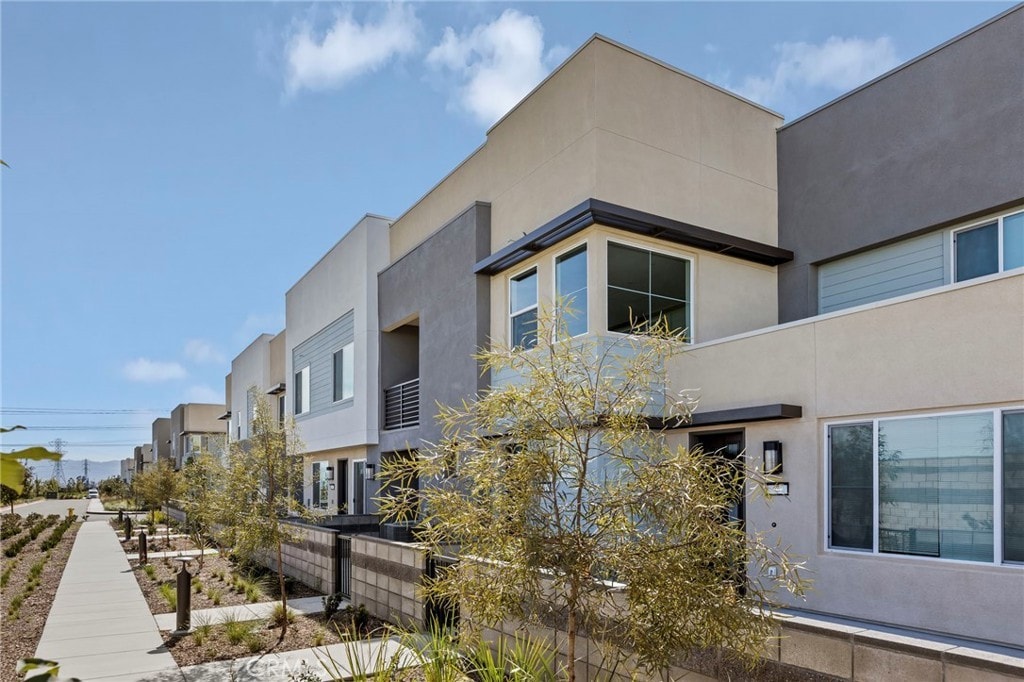
During his latest Neighborhood Talks visit, Ontario City Council District 3 candidate D'Andre Lampkin heard a consistent message from residents of the Neuhouse community: they are optimistic about South Ontario's future, but they want growth to deliver more than housing. They want stronger infrastructure, more local businesses, better communication, improved neighborhood amenities, and a city that increasingly reflects the people who now call it home.
South Ontario is still being built.
That reality was evident during D'Andre Lampkin's recent Neighborhood Talks visit through the Neuhouse master-planned community, where residents described both the opportunities and frustrations that come with living in one of Ontario's fastest-growing areas.
Neuhouse includes several newer residential neighborhoods within Ontario Ranch, with attached and detached homes developed as part of the broader transformation of South Ontario.
What Lampkin heard was not an overwhelmingly anti-development message.
Quite the opposite.
Many residents said they like Ontario, appreciate the growth occurring around them, enjoy the newer housing and amenities, and remain optimistic about what South Ontario will become.
But they also made clear that building homes is only the beginning.
"Again and again, residents described a community they are happy to call home while also asking what comes next," Lampkin said. "The message I heard was that South Ontario should continue growing — but the next stage of growth should focus just as much on building community as it does on building houses."
Housing Brought Residents to Ontario. Now They Want a Complete Community.
Several Neuhouse residents told Lampkin that housing affordability played an important role in their decision to move to Ontario.
Some had relocated from Orange County and other higher-cost areas of Southern California. They appreciated having the opportunity to purchase newer homes while remaining within reach of employment centers throughout the region.
One resident said Ontario has done a good job producing housing but believes newer neighborhoods sometimes appear too similar, describing some developments as "cookie-cutter" and expressing a desire for greater architectural variety.
Another resident praised the wider streets found throughout much of South Ontario and said the layout helps traffic move more efficiently than in communities he previously lived in.
Residents also spoke positively about the Ontario Tower Buzzers baseball stadium and the continued arrival of new stores and families.
But alongside that optimism was a recurring question:
Will the infrastructure, businesses, services, and civic amenities surrounding the homes mature at the same pace?
More Things to Do — and More Reasons to Stay in Ontario
One resident told Lampkin that if he could change one thing about his neighborhood, it would simply be to have more things to do nearby.
He also described Ontario as a commuter city and said he would like to see more residents able to find meaningful employment within the city rather than routinely traveling elsewhere for work.
That observation stood out to Lampkin.
"A complete community should increasingly allow people to live, work, shop, learn, and enjoy recreation without spending a significant portion of their lives commuting somewhere else," Lampkin said. "Housing growth and economic development should reinforce one another."
Residents said they would like to see Ontario continue attracting employers while creating stronger pathways for local residents to benefit from those jobs.
Residents Want More Small Businesses and Local Character
Another recurring theme involved the kinds of businesses arriving in South Ontario.
Several residents said they would like the City to place greater emphasis on attracting independently owned businesses and locally distinctive restaurants and shops rather than relying primarily on national chains and corporate franchises.
One resident said Ontario has "too much corporate interest" and wanted to see greater attention paid to small businesses.
Another expressed disappointment with some of the retailers entering the area and said South Ontario should be competitive for businesses often associated with growing middle- and upper-middle-income communities, specifically mentioning stores such as Trader Joe's and Sprouts.
For Lampkin, those comments reflected something larger than grocery-store preferences.
"Residents are beginning to ask what will give South Ontario its own identity," Lampkin said. "They don't simply want more development. They want places with character, experiences that bring neighbors together, and businesses that make South Ontario somewhere people want to spend their time."
Construction Comes With Growing Pains
Residents repeatedly acknowledged that they purchased homes in a community that is still under construction.
They nevertheless expressed frustration with avoidable problems associated with that construction.
More than one resident independently mentioned finding nails, screws, or other construction debris in roadways near active development areas, including along Ontario Ranch Road.
Residents said construction crews and developers should have a responsibility to keep surrounding streets clear of materials that can damage tires or create hazards for motorists.
Others raised questions about the amount of time certain streets and infrastructure projects appear to be taking to complete.
Haven Avenue was mentioned repeatedly.
Residents questioned its continuing buildout, the condition of landscaping around portions of the community, pedestrian accessibility, and how the roadway will ultimately accommodate continued population growth.
"Residents understand that construction is part of living in a growing community," Lampkin said. "What they are asking for is predictable progress, attention to safety, and clearer information about when unfinished infrastructure will actually be completed."
HOA Experiences Vary Across Neuhouse
Because Neuhouse includes different residential areas and housing products, Lampkin found that experiences with homeowners associations and property management were not uniform.
Some residents expressed significant dissatisfaction.
One resident bluntly described his HOA as ineffective, citing increasing assessments, dirty pools, inconsistent enforcement of community rules, pest problems, and amenities that he believed were not being properly maintained.
Another resident reported dead bushes and trees around his neighborhood and said residents had begun replacing some landscaping themselves because they felt they were not receiving adequate responses from property management or association leadership.
Residents also mentioned falling trees, potholes or depressions in common landscaping areas, parking concerns, and inconsistent experiences depending on where within the broader Neuhouse community they lived.
Lampkin emphasized that many HOA matters fall outside the direct authority of City Hall.
However, he said the conversations remain important because residents do not always distinguish between developer, HOA, property-management, and municipal responsibilities.
"One thing local government can do better is help residents understand who is responsible for what," Lampkin said. "When people have a problem, they should not have to spend months figuring out whether they need to contact the City, a developer, an HOA board, or a management company."
Wi-Fi and Digital Infrastructure Remain a Concern
Poor internet connectivity surfaced again during the Neuhouse conversations.
One resident who works from home described unreliable Wi-Fi infrastructure as an ongoing frustration.
Similar concerns have previously been raised by residents in other South Ontario neighborhoods during Lampkin's listening walks.
As more residents work remotely, attend virtual meetings, access healthcare online, complete school assignments, and rely on connected devices, Lampkin said digital infrastructure can no longer be considered merely a convenience.
"Reliable internet increasingly affects whether someone can work, learn, communicate, and access essential services," Lampkin said. "As South Ontario grows, digital connectivity needs to be part of the infrastructure conversation alongside roads, utilities, and public facilities."
Traffic, Trucks and Children's Safety
Some residents raised concerns about speeding vehicles and trucks traveling through developing neighborhoods.
One resident said children appear to spend less time outside because of traffic, trucks, air quality, and the perception that neighborhood streets are becoming less comfortable for play.
Other residents expressed concern about future evacuation routes and emergency access as the area continues to develop.
At the same time, others praised South Ontario's wider roadways and said they generally find traffic movement better than in communities they previously lived in.
Lampkin said the differing perspectives underscore why transportation decisions should be based on actual conditions and neighborhood-level information.
"Traffic is not experienced the same way on every street," he said. "That is why neighborhood conversations matter. A citywide traffic statistic may not tell you what a parent sees outside their house every afternoon."
More Trees — and More Attention to the Public Realm
Trees and landscaping surfaced in several conversations.
Residents wanted more trees throughout newer neighborhoods and expressed frustration when newly installed landscaping died or was not replaced.
Some described residents taking matters into their own hands and replanting trees where landscaping had failed.
For Lampkin, those comments reinforce the importance of looking beyond buildings when evaluating development quality.
"The public realm matters," he said. "Trees, sidewalks, landscaping, lighting, parks, and well-maintained common spaces all influence how people experience their neighborhood every day."
Library Access and an Unexpected Trip to Upland
One parent told Lampkin that the family travels to the Upland Public Library for children's story time.
The resident assumed Ontario offered comparable programming but was uncertain about what library options were available close to Neuhouse.
That conversation reinforced an issue Lampkin has previously raised publicly: as South Ontario's population grows, library access and programming should grow with it.
Ontario currently operates public library services elsewhere in the city, including the Lewis Family Branch on Riverside Drive, and provides youth and family programming.
Yet the fact that a South Ontario parent is routinely leaving Ontario for story time raises another question beyond physical library capacity:
Are residents aware of the services already available to them?
"Whether the issue is building additional library capacity or communicating existing programs more effectively, we should pay attention when families are leaving the city for services they would rather access closer to home," Lampkin said.
Lampkin recently addressed the issue in South Ontario's Growth Should Bring More Libraries, arguing that libraries should be considered part of the educational, digital, workforce, and resilience infrastructure accompanying population growth.
Whispering Lakes Continues to Surface in Neighborhood Conversations
One resident also raised concerns about the condition of Whispering Lakes Golf Course and referenced a widely circulated YouTube video criticizing the municipal course.
It was not the first time Lampkin has heard residents bring up Whispering Lakes.
Rather than attempting to address the issue briefly within the broader Neuhouse conversation, Lampkin said he intends to spend additional time reviewing the course, its role within South Ontario, and what residents have been saying about its future.
"Whispering Lakes deserves its own conversation," Lampkin said. "When the same issue begins appearing independently in multiple neighborhoods, that tells me it is worth taking a closer look."
Residents Want City Hall to Communicate Where They Are
Several residents said they would like more frequent communication about development occurring throughout South Ontario.
They want to know what is being built, why projects appear delayed, when roads will open, and what the finished community is expected to look like.
One resident specifically suggested that the City expand its use of platforms such as TikTok to communicate with younger residents and families.
Lampkin said the underlying suggestion is broader than any particular social-media platform.
"Government communication has to evolve with the people it serves," Lampkin said. "Residents should not have to search through complicated documents or attend every public meeting simply to understand what is being built down the street."
He said short-form video, interactive development maps, neighborhood-specific updates, email alerts, and clearer social-media communication are all worth exploring.
Diversity and Representation Were Part of the Conversation
Some of the most personal conversations during the Neuhouse walk concerned diversity and representation in local government.
Residents from Filipino, Dominican, Mexican, African American, and other backgrounds spoke about the changing demographics of South Ontario and expressed a desire to see leadership that more visibly reflects the people now living there.
One resident, originally from the Philippines, said he wanted to see more cultural experiences in Ontario recognizing the city's growing ethnic diversity.
He also told Lampkin that he was encouraged to see an African American candidate with a substantial record of service seeking to represent District 3.
Another resident of Dominican and Mexican heritage expressed a similar reaction.
Other residents discussed what they perceived as longstanding political networks within Ontario and said they wanted greater opportunities for new voices and ideas to enter city leadership.
Lampkin said he was struck by how often the subject arose without being prompted.
"I did not walk into these neighborhoods asking people about race or political representation," Lampkin said. "Residents brought those subjects to me. What I heard was a desire for people to feel that leadership opportunities are open to anyone who has demonstrated the ability, experience, integrity, and commitment to serve."
Lampkin said diversity should never replace merit — but neither should assumptions about who traditionally belongs in leadership prevent qualified people from earning an opportunity to serve.
Shared Experiences Beyond Politics
One conversation became particularly personal.
A resident who had relocated to Ontario discussed growing up in South Central Los Angeles and said his parents moved the family to Ontario while he was in 10th grade to escape gang activity and drugs.
Lampkin discovered that the two had grown up only miles apart.
They exchanged stories about navigating neighborhoods often defined from the outside by poverty, violence, and negative stereotypes — and about ultimately building lives beyond those circumstances.
"That conversation had nothing to do with campaign talking points," Lampkin said. "It was two people realizing that we understood something about each other that neither of us expected when the conversation began."
For Lampkin, those moments are part of why he continues walking neighborhoods rather than relying solely on traditional political events.
"You learn about a city differently when you meet people where they live," he said.
Phase One Built the Homes. Phase Two Must Build the Community.
Perhaps the clearest message emerging from Neuhouse was that residents are largely optimistic.
They like Ontario.
They appreciate the newer housing.
They enjoy seeing businesses and families arrive.
They value clean neighborhoods and the continued transformation of South Ontario.
But they also want more.
More local character.
More trees.
More things to do.
More small businesses.
Better digital infrastructure.
Completed roads.
Safer streets.
Better-maintained communities.
More accessible civic amenities.
Clearer communication.
And leadership that recognizes how rapidly the identity of South Ontario is changing.
"South Ontario has spent years building homes," Lampkin said. "The next chapter is about making sure we are building everything around those homes that turns neighborhoods into a complete community."
For Lampkin, that means neither resisting growth nor accepting every aspect of growth without question.
It means listening to the people experiencing it.
"Residents are not asking Ontario to stop moving forward," Lampkin said. "They are asking us to make sure the quality of life surrounding that growth moves forward with it."
Phase one was building homes. Phase two is building community.
And according to what residents told Lampkin in Neuhouse, that second phase has already begun.
D'Andre Lampkin is a qualified candidate for Ontario City Council, District 3. His Neighborhood Talks and Community Listening Walks bring him directly into South Ontario neighborhoods to hear from residents about growth, public safety, infrastructure, city services, and quality of life.
Service • Experience • Community
Paid for by Lampkin for Ontario City Council 2026.
Written by
Lampkin for Ontario Campaign
Content creator and writer sharing insights and stories.